

Industrial Cleaning in Dung Quat: A Standard Process for Factories and Industrial Parks
The Dung Quat Economic Zone in Quang Ngai brings together many heavy-industry plants, warehouses, and a seaport operating almost continuously. In this environment, industrial cleaning is not just about looking clean — it is part of operations: clean floors keep forklifts running safely, clean warehouses keep goods free of dust, and a clean production area keeps a plant ready for an inspection at any time.
An industrial cleaning program in Dung Quat therefore needs to be designed for each plant individually, rather than applying one generic package everywhere. Area, type of production, vehicle traffic, and customer standards all differ, and the cleaning schedule must follow those differences.
Why industrial cleaning in Dung Quat has its own requirements
Industrial dust and salty sea air
Plants near the port and the sea face raw-material dust, truck dust, and salt in the air all at once. Dust settles quickly on floors, machinery, and factory exteriors, while salt air degrades metal surfaces faster if they are not cleaned regularly. Cleaning frequency here is therefore usually higher than for inland plants.
Large areas, continuous operations
Plants, warehouses, and yards in Dung Quat are usually very large and run in shifts, including night shifts. Cleaning cannot wait until the plant shuts down; it must be organized in shifts running alongside production: areas at rest get a thorough clean, while areas in operation are cleaned in safe time windows that do not disrupt the production line.
Customer and inspection standards
Many plants in Dung Quat serve large customers, including foreign customers, so the plant must always be inspection-ready. A regular cleaning schedule, with records and a check after every shift, leaves a plant far better prepared than a last-minute clean-up before an inspection visit.
A clean plant is not one that has just been cleaned — it is one that is always ready.
What industrial cleaning usually covers
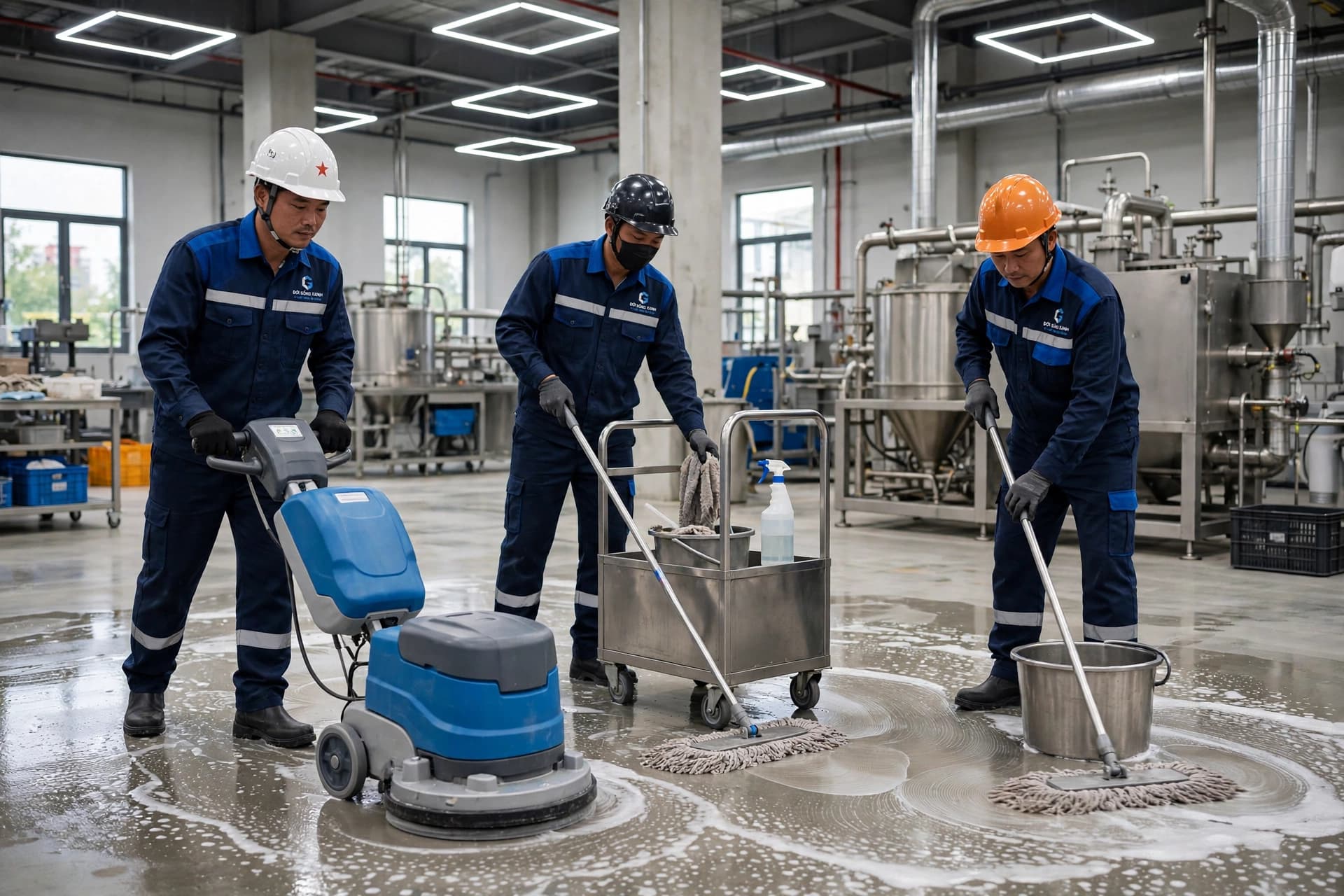
- Factory floors: sweeping, machine scrubbing, and removing oil stains and industrial dust.
- Warehouses and staging areas: cleaning aisles, racks, and goods-in/goods-out areas.
- Offices, meeting rooms, and common areas: daily cleaning during working hours.
- Toilets, changing rooms, and dining areas: cleaning and deodorizing by shift.
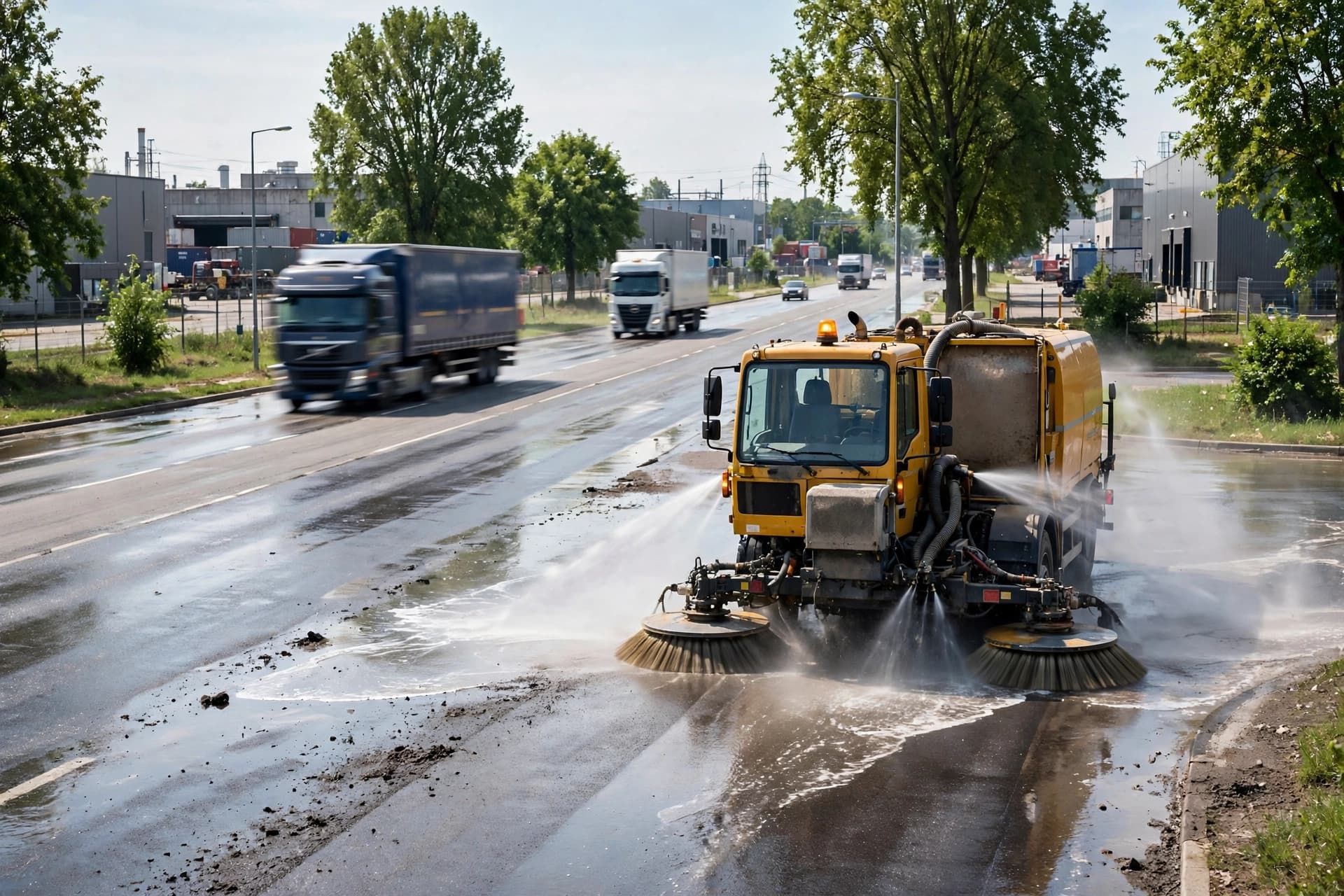
- Internal roads, yards, and port areas: sweeping and washing to match vehicle traffic.
- Factory exteriors, glass, and high areas: periodic cleaning by season and maintenance schedule.
A standard five-step process
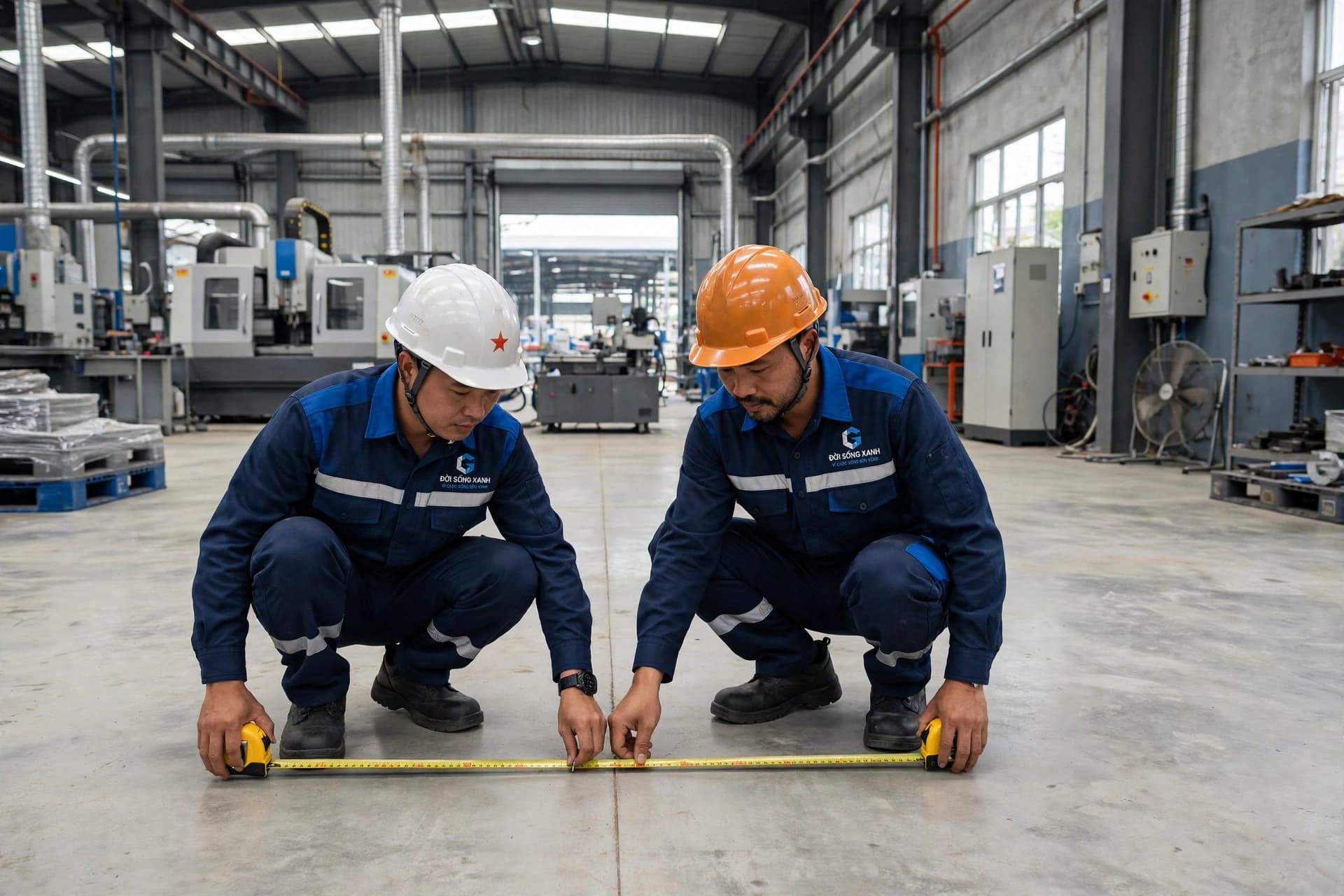
- Site survey: measure areas, record dust types, production rhythm, and sensitive areas such as electrical zones and special goods.
- Plan and schedule: divide areas by dirt level and priority, assign a frequency to each area, and place shifts in time windows that do not obstruct production.
- Deploy the right equipment: floor scrubbers, high-pressure washers, and road sweepers for large areas, combined with manual work in tight corners and along wall edges.
- Check and hand over after each shift: re-inspect cleaned areas, record anything below standard, and fix it immediately instead of leaving it for the next shift.
- Adjust periodically: review actual records each month to increase frequency where dirt builds up fast, reduce it where little arises, and adjust for the season.
Occupational safety goes with progress
Cleaning inside an operating plant always carries risks: forklifts passing by, wet slippery floors, and running equipment. The cleaning team must therefore follow the plant's safety rules, wear full protective gear, place warning signs in work areas, and coordinate closely with operations to avoid collisions with vehicles and people. A clean floor that is not safe is not good cleaning.
What a plant should prepare before hiring a service
- A site plan and the area of each zone, including restricted-access areas.
- The production schedule and the time windows when each area can be worked in.
- The plant's safety rules, entry procedures, and protective-gear requirements.
- The cleanliness standard the plant already applies, if any, so the cleaning team gets it right from the start.
Start with a survey, not with a quote
Every plant in Dung Quat has its own cleaning problem, so an accurate quote can only come after a site survey. The survey lets both sides agree on scope, frequency, and working hours, so the cleaning schedule matches reality and no unexpected extras arise during operations. Plants needing industrial cleaning in Dung Quat can contact Doi Song Xanh for a site survey before agreeing on a plan.