


Caring for factory campus greenery through the dry season
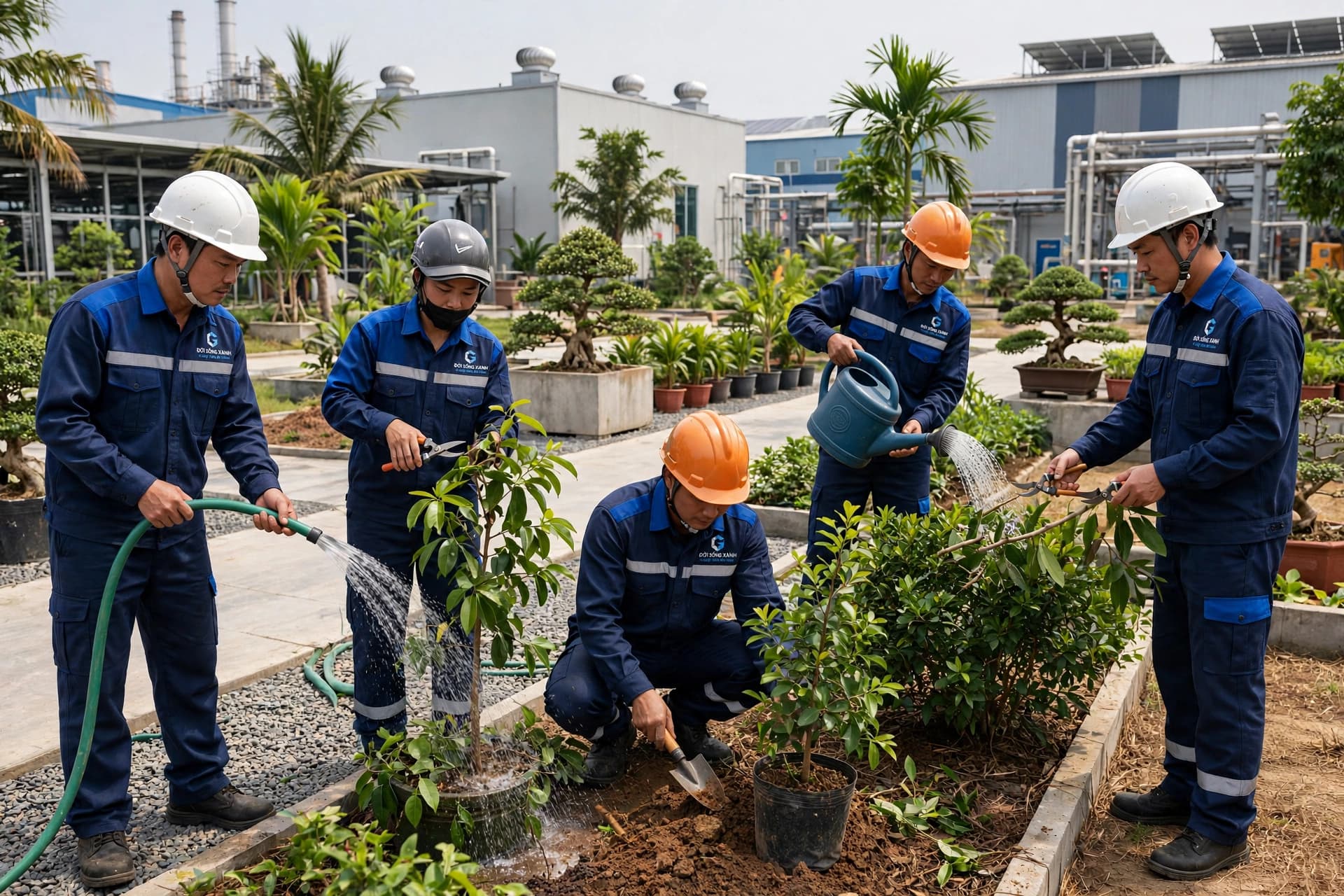
In the dry season, greenery on a factory campus must cope at once with harsh sun, low humidity and fast-drying soil. Plants that were lush in the rainy season can wilt, drop leaves early or grow slowly after just a few weeks of continuous heat.
Dry-season care is not about watering more at any cost, but about watering correctly, at the right time, combined with ways to retain soil moisture, so plants get through the hot months still healthy when the rains return.
What dry-season difficulties plants face
Losing water faster
Harsh sun makes water evaporate quickly, both from leaves and from the soil surface. Young plants and newly planted trees are affected first, because their roots are still shallow and not deep enough to draw water from lower soil layers.
Dry, hardened soil
Soil left dry for a long time often hardens at the surface, so irrigation water runs off instead of soaking down to the roots. Watering quickly and heavily on dry, hardened soil therefore wastes water and achieves little.
Pests and leaf scorch
Plants weakened by water shortage are also more vulnerable to pests, and young leaves scorch easily in midday sun. These signs need to be spotted early, before they spread across the campus.
The dry season does not kill plants in a day, but weakens them day by day if they are not cared for properly.
Adjusting the watering schedule for the dry season
- Water in the early morning or late afternoon, avoiding midday when the sun is harshest and water evaporates fastest.
- Water deeply and less often instead of shallowly every day, so roots grow deeper and plants tolerate drought better.
- Loosen the soil surface lightly before watering if the soil has hardened, so water soaks in instead of running off.
- Mulch around the base with mulch, bark or dry grass to retain moisture and cool the soil.
Care beyond watering
- Prune lightly any dry or diseased branches so the plant can focus on its healthy parts.
- Avoid heavy pruning during the harshest sunny period, because the canopy is also a natural shade layer for the trunk and roots.
- Fertilise moderately, favouring organic fertiliser that helps soil retain moisture, and avoid heavy fertilising when plants are weak.
- Check regularly for pests, especially after long dry, windy spells.
Monitoring and adjusting
Each week, walk the whole campus: which plants wilt early, which areas dry out fastest, and whether the irrigation system has any blockages or leaks. From those observations, next week's watering and care schedule will match reality better than applying one common schedule to the whole campus.