

Internal roads in industrial parks: scheduling sweeping and washing around vehicle traffic
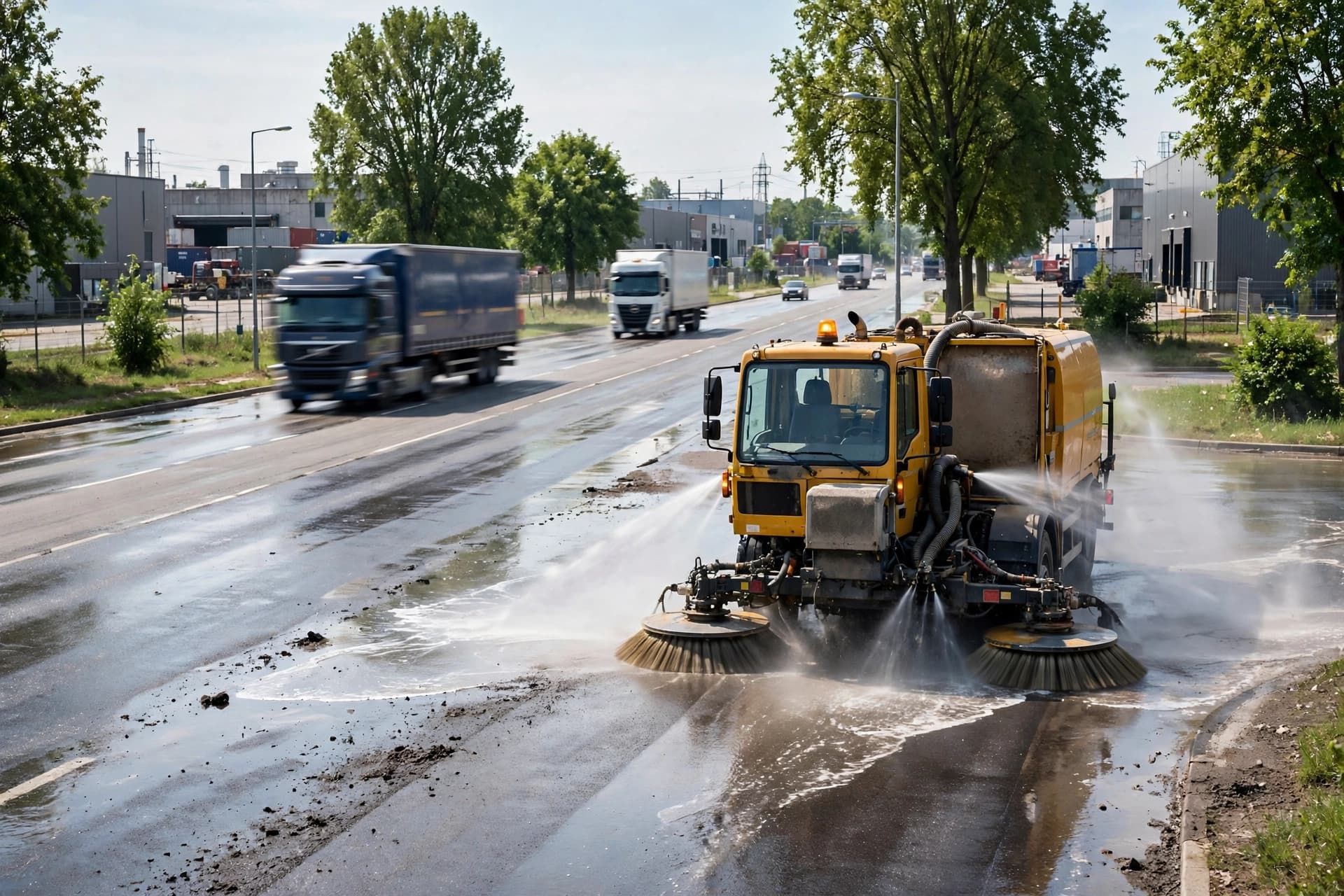
An effective internal-road cleaning schedule starts with understanding truck peak hours and dust-prone areas. A road with trucks running all day cannot be swept and washed on the same schedule as a road with only occasional cars.
Instead of sweeping and washing every road the same way, schedule around vehicle traffic: roads that get dirty fast are cleaned more often, roads with little traffic less often, and working hours must avoid peak hours so transport is not disrupted.
Understanding vehicle traffic before scheduling
Peak and off-peak hours
Most industrial parks have two clear peak windows: the start of a shift, when trucks arrive for delivery, and the end of a shift, when they leave. Between them there is usually a quiet window of a few hours — the ideal time to sweep and wash without competing with traffic.
Which roads generate the most dust
Roads near staging areas, loading zones and entrances get dirty fastest, because trucks bring in soil and sand from outside. Internal roads with little traffic can stay clean much longer, even with the same road surface quality.
Season and weather also matter
The dry season brings more airborne dust; the rainy season brings more mud. Sweeping and washing schedules should adjust with the seasons instead of staying fixed all year.
A clean road is not the road swept the most, but the road swept at the right time.
Scheduling around vehicle traffic
- Divide internal roads into routes by traffic volume and dust generation.
- Assign a frequency to each route: high-traffic routes swept and washed daily, medium routes a few times a week, low-traffic routes spaced out as needed.
- Schedule shifts into the quiet windows between peak hours, and always have a plan to swap shifts when vehicle schedules change suddenly.
- Prioritise truck routes and main entrances first, then secondary routes and car parks.
Suitable equipment and methods
Wide internal roads with heavy truck traffic suit specialist sweeping and washing vehicles — fast and even. Narrow corners, road edges and areas around drains still need manual work so nothing is missed. After washing, check whether drains are blocked by sand, because a clean road with blocked drains still floods when it rains.
Measuring and adjusting
Each week, walk the routes quickly after sweeping and washing: is there still dust at road edges, are there mud marks at entrances, have truck drivers complained about anything? Those observations are the basis for raising or lowering each route's frequency, instead of keeping one fixed schedule for every route at all times.