


Workers' canteens: points to agree before operations start
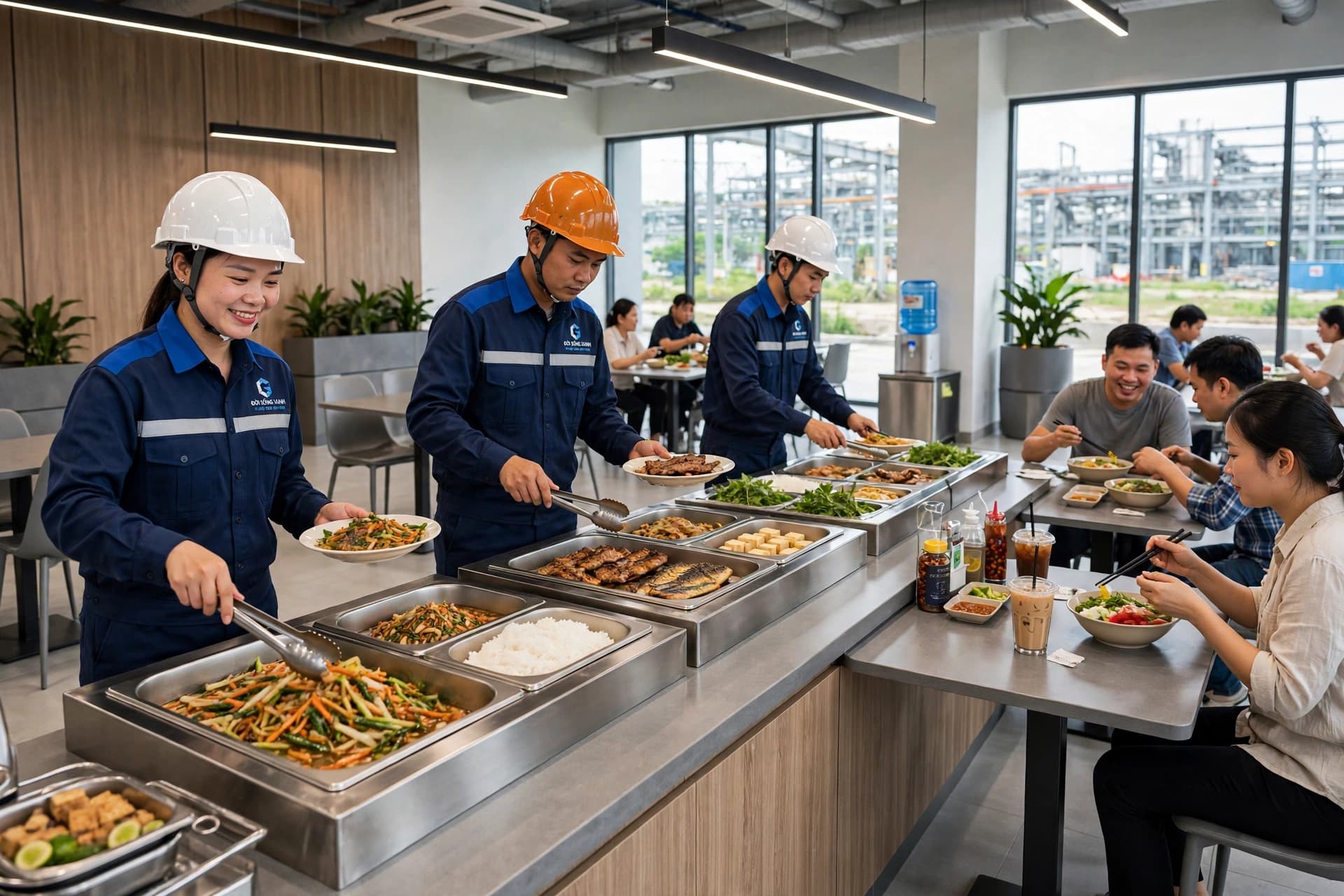
Meal numbers, shift counts, mealtimes and kitchen premises are the information that decides a canteen plan.
A workers' canteen sounds simple, but whether it runs smoothly depends on a few pieces of information agreed right from the start. Just one wrong meal count, one wrong mealtime or a missing kitchen area, and a whole mealtime can fall apart.
The four points below should be agreed in writing before operations start, so both sides understand things the same way and do not have to handle surprises while workers are queuing.
Four points to agree first
Meal numbers and shift counts
The number of meals per day and how they split across shifts is the foundation of every other calculation: ingredient quantities, kitchen staffing and serving time. This figure should be based on the actual workforce per shift, plus an allowance for extra shifts, rather than a rough estimate.
Mealtimes
Each shift's mealtime must match the factory's break times and be long enough for workers to finish eating without rushing. If mealtimes for successive shifts are too close together, the kitchen will not have time to prepare and the dining area will not have time to be cleaned between rounds.
Kitchen premises and dining area
The kitchen needs enough space for preparation, cooking, portioning and storage, with clean and dirty areas kept separate. The dining area needs enough seats for the busiest shift, with clear walkways and handwashing areas, so mealtime does not turn into a crowd.
Menus and food safety
Menus should rotate weekly, be nutritionally balanced and suit the heavy or light nature of each workforce group's work. Ingredient sources, storage procedures and quality checks need to be agreed and recorded, so every meal can be traced.
A good meal is not just a filling meal, but a meal served on time, nutritious and reassuring.
A day in operations
- Morning: confirm meal numbers by shift, prepare ingredients and check the kitchen.
- Before mealtime: cook and portion meals to each shift's exact schedule.
- During mealtime: serve, keep the dining area clean and help promptly when meals run short.
- After mealtime: clean up, clean the kitchen and dining area, and record the day's outstanding items.
When to adjust
Workforce numbers changing with the season, extra production shifts or a factory changing its working hours are all reasons to review the canteen plan. Adjusting early, as soon as a new production schedule is known, is much cheaper and easier than handling surprises while serving is under way.
Related articles
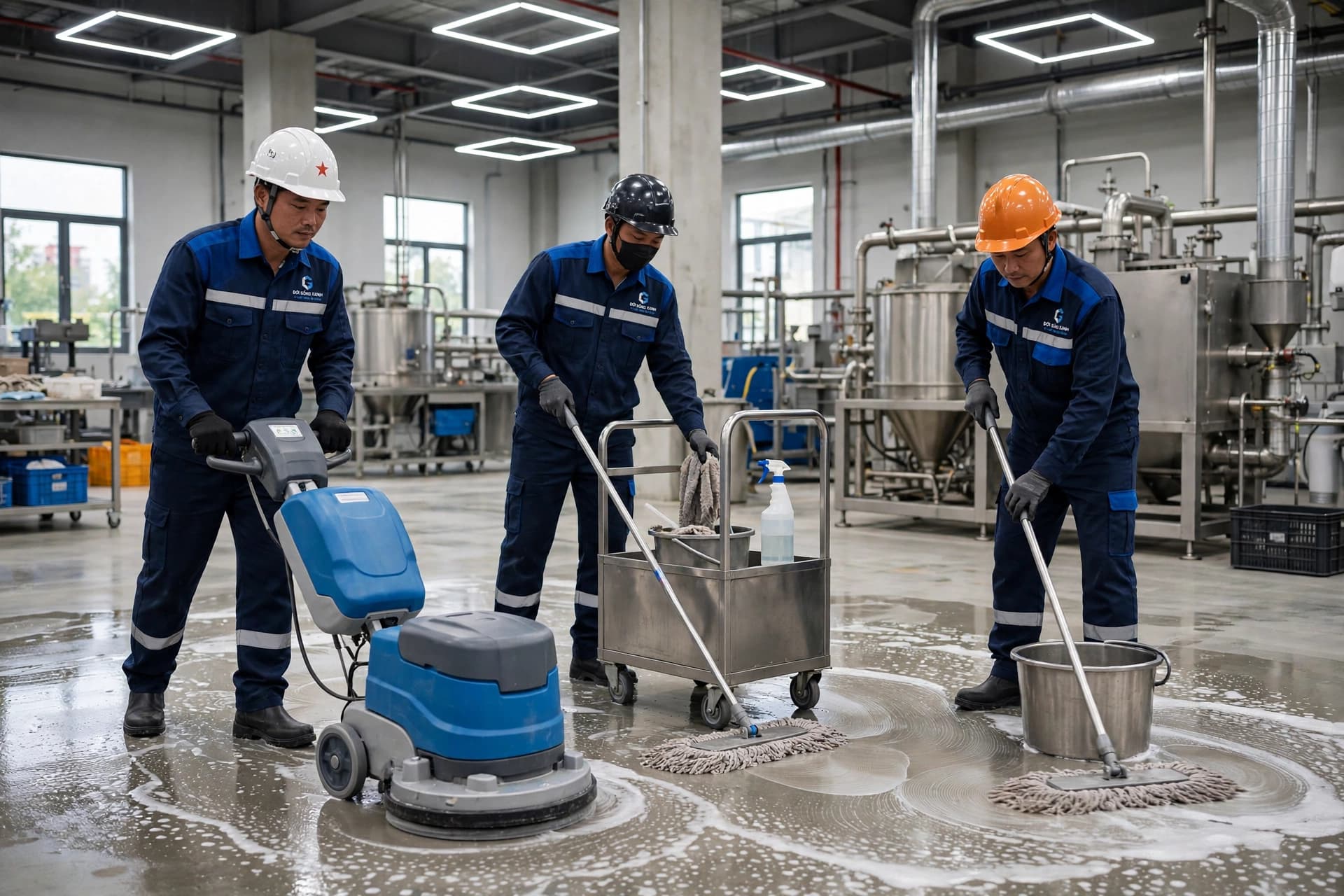
Industrial Cleaning in Dung Quat: A Standard Process for Factories and Industrial Parks
Industrial cleaning in Dung Quat needs its own process: industrial dust, salty sea air, large areas, and round-the-clock operations. This article covers the scope of work, a five-step process, and what factories should prepare before hiring a service.
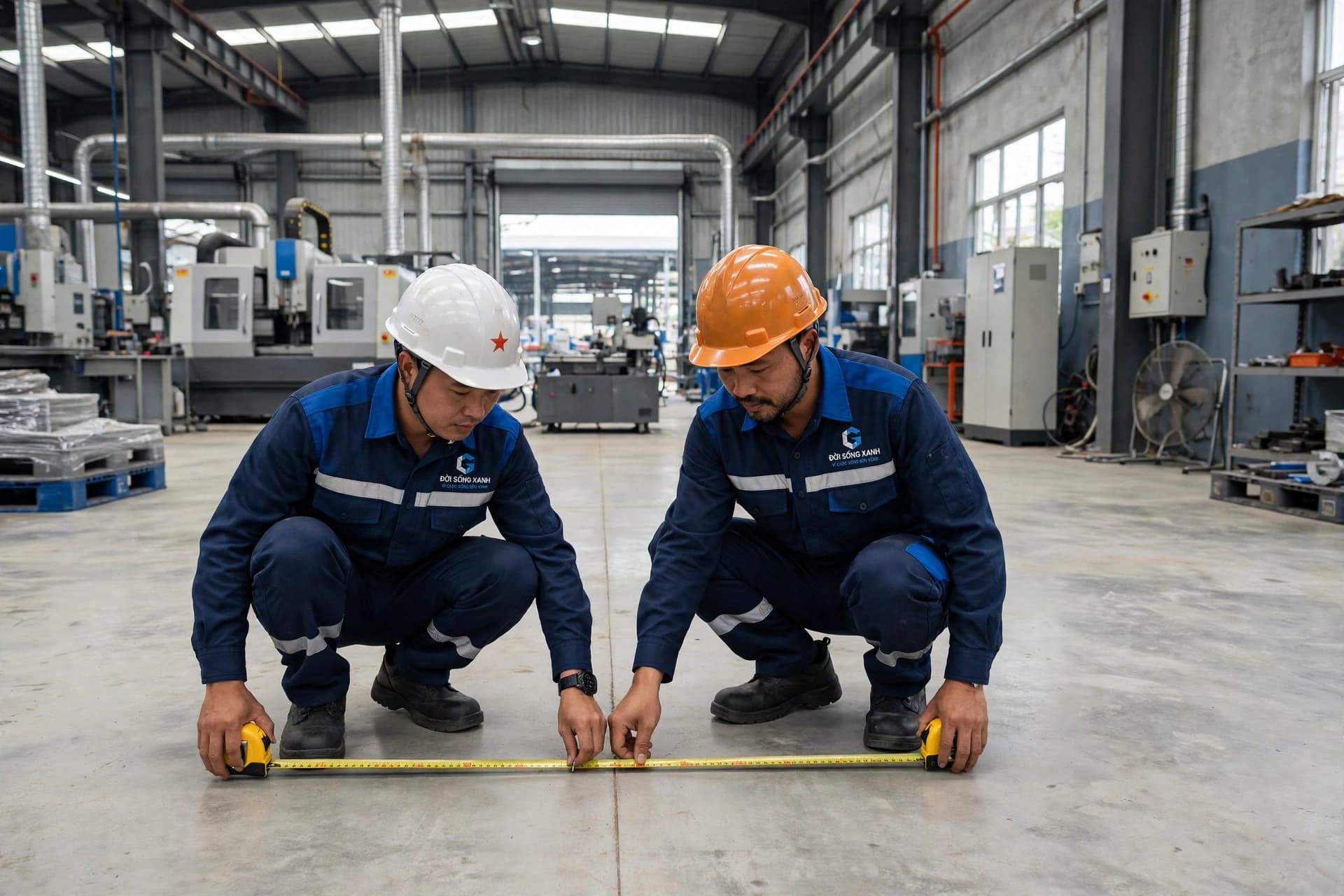
Site survey before a quote: why it is needed and what it includes
A thorough survey helps quotes match reality and avoids extras during delivery. Here is what a factory should prepare.

Internal roads in industrial parks: scheduling sweeping and washing around vehicle traffic
An effective road-cleaning schedule starts with understanding truck peak hours and dust-prone areas.
Looking for a reliable operations partner?
Let Đời Sống Xanh survey your site and propose the best-fit plan for your business.